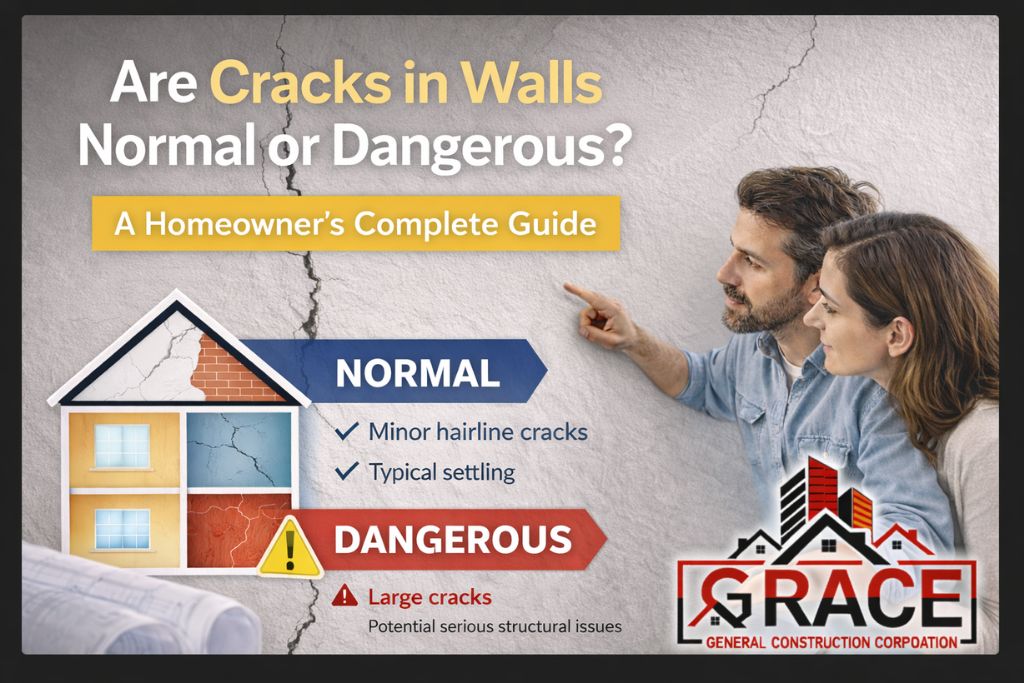
If you’ve ever stared at a crack in your wall or ceiling and thought, “Is my house about to fall apart?” you’re not alone. In the Bronx and across NYC, we see this concern every single week.
Here’s the truth most homeowners never hear clearly:
Most cracks are normal. Some are not.
The key is knowing which ones matter, how to measure them, and when to stop monitoring and call a professional.
This guide breaks it all down visually, practically, and without scare tactics, so you can make a smart decision before panic (or before paying for unnecessary inspections).
Types of Wall & Ceiling Cracks (With Visual Identification)
Hairline Cracks (Cosmetic & Common)
Hairline cracks are the most common type we see in Bronx homes, especially older properties with plaster walls.
What they look like:
- Less than 1/16 inch wide
- Thin, straight, and shallow
- Often found in ceilings, corners, or drywall joints
What they usually mean:
- Normal house settling
- Seasonal temperature changes
- Minor drywall or plaster movement
✅ Almost always cosmetic
Vertical Cracks (Settling or Drywall Joints)
Vertical cracks usually follow drywall seams or framing lines.
Typical traits:
- Straight up-and-down pattern
- Narrow and consistent width
- Often reappear after cosmetic patching
When they become concerning:
- They widen beyond hairline thickness
- They appear alongside sticking doors or windows
Usually safe, unless they’re widening or multiplying
Diagonal Cracks (Foundation Settlement)
These cracks tend to make homeowners nervous, and sometimes, for good reason.
Common locations:
- Above doors or windows
- From corners of rooms
- Near exterior walls
Why they happen:
- Uneven foundation movement
- Soil shifting beneath the home
Worth monitoring closely, especially if they grow over time
Horizontal Cracks (Serious Structural Warning)
Horizontal cracks are rarely cosmetic.
Red flags:
- Long, straight horizontal lines
- Often found in foundation walls or basements
- May appear with bowing or bulging walls
These require immediate professional evaluation
Stair-Step Cracks (Masonry & Block Foundations)
Common in brick or block homes across NYC.
How to spot them:
- Zig-zag pattern following mortar joints
- Often near foundation walls or exterior corners
Strongly associated with foundation movement, especially if widening or leaking
When to Worry About Cracks (Safe vs Dangerous Signs)
Crack Width & Measurements That Matter
Here’s a simple rule of thumb we use with homeowners:
- Safe: Under 1/16 inch (hairline)
- Monitor: Around 3–5mm
- High risk: 1/4 inch or wider
If you can fit the edge of a coin or your pinky into the crack, it’s time to stop guessing.
Growth & Movement Over Time
Cracks that:
- Get longer
- Get wider
- Reappear after repair
…are far more important than cracks that simply exist.
Seasonal movement = normal
Continuous movement = needs inspection
Location Red Flags
Pay extra attention if cracks appear:
- Near load-bearing walls
- Around doors and windows
- In ceilings that sag or bow
Secondary Warning Signs
Cracks paired with these symptoms deserve attention:
- Doors or windows sticking
- Sloping or uneven floors
- Rippling wallpaper
- Yellow or brown water stains
Simple Tests Homeowners Can Perform
The Pencil Test
Mark both ends of the crack, write the date, and check back in 30–60 days.
Growth = movement
The Pinky Test
If your pinky fits inside the crack, it’s no longer cosmetic.
The Push Test
Gently press both sides of the crack.
- Movement = separation
- Solid = surface issue
The Door & Window Test
Doors or windows suddenly sticking are one of the most reliable structural indicators.
Common Causes of Wall & Ceiling Cracks
Normal Home Settling
Especially common in newer renovations or recently purchased homes.
Lumber Drying & Vacant Homes
Homes left without consistent heating or cooling often develop cracking.
Soil Movement & Foundation Stress
Clay-heavy soils and moisture changes are a major factor in NYC properties.
Moisture, Roof, & Plumbing Leaks
Look for:
- Yellow/brown stains
- Rusting near structural elements
- Cracks paired with dampness
Construction & DIY Issues
Improper drywall taping and rushed renovations create cracks that look serious, but aren’t structural.
When to Call a Professional (And What Happens Next)
Situations That Require Immediate Inspection
- Horizontal cracks
- Cracks wider than 1/4 inch
- Rapidly expanding cracks
- Multiple cracks + movement symptom
What a Professional Evaluation Involves
A real inspection looks at:
- Crack pattern and direction
- Depth and separation
- Moisture presence
- Structural load paths
No guessing. No fear tactics.
Why Cosmetic Repairs Fail
If the structure is moving, spackle and paint won’t fix the problem, they just hide it temporarily.
PS: Choosing an experienced remodeling contractor is key to repairing wall cracks safely and preventing them from coming back. Check out our guide: How to Choose the Right Remodeling Contractor in NYC.
FAQs About Cracks in Walls & Ceilings
Are ceiling cracks a sign my house is unstable?
Only if they’re wide, growing, or paired with sagging or movement.
How much cracking is considered normal?
Thin, straight cracks under 1/16 inch are extremely common.
Do cracks always mean foundation problems?
No. Many are cosmetic or settling-related.
Should I repair a crack before monitoring it?
No, repair after determining whether the crack is active or stable.
Final Thoughts
Most cracks are harmless.
The dangerous ones follow patterns, measurements, and movement, not fear.
If you’re unsure, the smartest move isn’t panic or patching, it’s clarity.
Grace General Construction Corp has helped Bronx homeowners for over 15 years, providing honest assessments, not scare-driven sales.
📍 2444 Delanoy Ave, Bronx, NY 10469
📞 (718) 775-8519
🌐https://maps.app.goo.gl/UoPGDoSVBqYNX66s7
If you want a professional opinion on whether a crack is cosmetic or structural, we’re always happy to help.