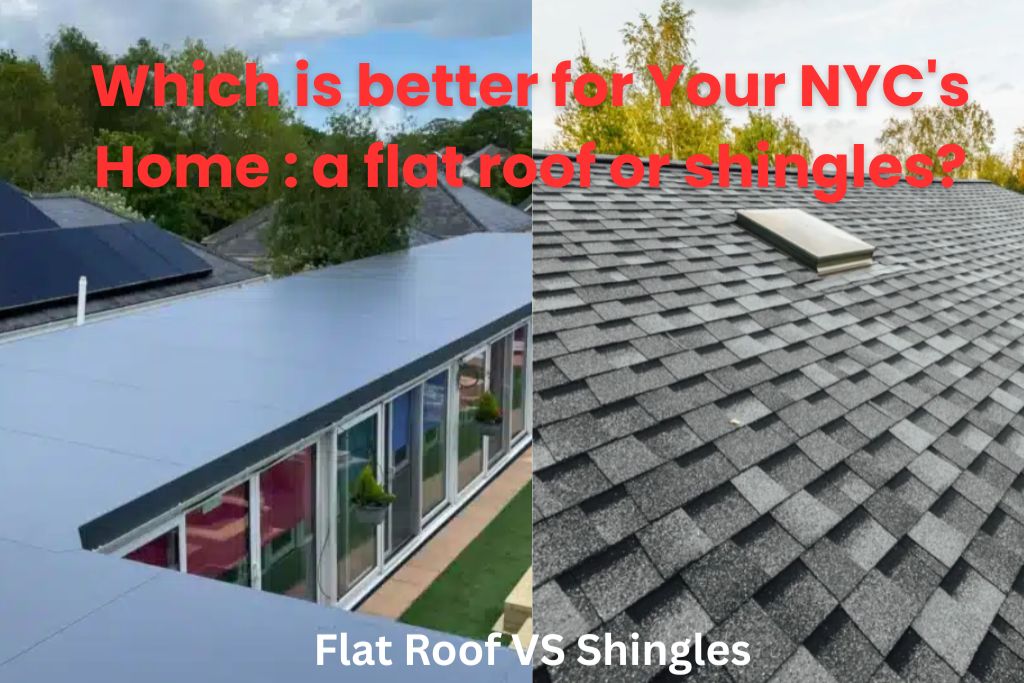
It depends. Flat roofs work well on modern homes and commercial buildings where drainage can be engineered. Shingles are the default for sloped residential roofs because they’re durable, affordable long-term, and handle rain and snow naturally.
The differences go beyond appearance. Cost, lifespan, maintenance, and climate performance all vary significantly between the two systems.
After years of installing both, I’ll walk you through each factor clearly, so you can make the right call for your home, not just the popular one.
What Is a Flat Roof?
A flat roof has a slight slope between 1 and 10 degrees, to direct water toward drains. It looks level from the outside but is engineered to shed water, not collect it.
Common on commercial buildings, apartment complexes, and modern homes, flat roofs are built for accessibility and function.
They’re easier to install than pitched roofs, safe to walk on for maintenance, and practical for rooftop uses like HVAC placement or outdoor living space.
Types of Flat Roofing Materials (EPDM, TPO, PVC, BUR)
Not all flat roofs are the same. The material you choose makes a big difference in durability and cost.
- EPDM (Rubber Roofing):
Affordable and flexible. Good for moderate climates but can absorb heat. - TPO (Thermoplastic Polyolefin):
Popular choice. Reflects heat, energy-efficient, and resistant to UV damage. - PVC Roofing:
Strong and durable. Handles chemicals, fire, and moisture well, but costs more. - BUR (Built-Up Roofing):
Traditional layered system using asphalt and gravel. Heavy but reliable.
Where Flat Roofs Are Commonly Used
Flat roofs are typically used where function matters more than slope:
- Commercial buildings (shops, warehouses)
- Apartment complexes
- Modern residential homes
- Extensions or garages
They’re also ideal when you need usable roof space, like:
- Solar panel setups
- Rooftop seating areas
- HVAC system placement
What Is a Shingle Roof?
A shingle roof is a sloped system covered with overlapping materials, typically asphalt designed to shed water, snow, and debris through gravity alone. No special drainage engineering required.
It’s the dominant roofing choice for residential homes because it combines reliable weather performance with long-term durability.
When installed properly, a shingle roof handles harsh conditions with minimal maintenance and can last 20 to 30 years or more depending on the material.
Types of Shingles (3-Tab, Architectural, Premium)
There are three types of Shingles, including:
- 3-Tab Shingles:
Basic and budget-friendly. Lightweight but shorter lifespan (15–20 years). - Architectural Shingles (Dimensional):
Thicker, more durable, and better looking. Most common choice for homeowners (20–30+ years). - Premium (Luxury) Shingles:
High-end option with superior durability and design. Can last 30–50 years.
Where Shingle Roofs Are Most Common
Shingle roofs are the standard for residential homes, especially in areas with:
- Heavy rain or humidity
- Seasonal storms or strong winds
- Cold winters or snow
They’re also preferred when:
- You want low maintenance
- You care about curb appeal
- You’re thinking about resale value
What Are The Differences Between Flat Roofs and Shingles?
Let’s break this down the way I explain it to homeowners on-site. These differences aren’t theoretical, they directly impact your budget, repairs, and how often you’ll need to call someone like me.
Cost
Upfront Installation Cost
Here’s what most homeowners can expect to pay:
- Flat roof:
- $3,000 – $11,500 total
- About $4.50 – $9.50 per sq ft
- Shingle roof:
- $7,500 – $24,000 total
- About $5.50 – $13.00 per sq ft
👉 Simple takeaway:
Flat roofs are usually cheaper to install because they use fewer materials and take less time.
📊 Quick Cost Comparison
| Category | Flat Roof | Shingle Roof |
| Cost per sq ft | $4.50 – $9.50 | $5.50 – $13.00 |
| Total cost | $3,000 – $11,500 | $7,500 – $24,000 |
| Installation time | Faster | Slower |
| Labor required | Less | More |
👉 In most cases, flat roofs are 20–40% cheaper upfront.
Long-Term Cost Comparison
The cheaper option upfront isn’t always cheaper later.
Flat Roof
- Lasts about 10–25 years
- Needs regular maintenance
- More likely to develop leaks if not checked
Shingle Roof
- Lasts about 20–50 years
- Needs less frequent repairs
- Problems are easier to fix
📉 20–30 Year Cost Outlook
| Factor | Flat Roof | Shingle Roof |
| Initial cost | Lower | Higher |
| Maintenance | Higher | Lower |
| Lifespan | Shorter | Longer |
| Replacement timing | Sooner | Later |
| Total long-term cost | Often higher | More balanced |
Lifespan and Durability
The average lifespan of each roof type:
- Flat roofs: 10–25 years (depending on material)
- Shingle roofs: 20–50 years
That’s a big gap, and it matters when you’re planning long-term.
Factors That Affect Durability
Flat roofs struggle with:
- Standing water (ponding)
- UV exposure breaking down membranes
Shingle roofs are affected by:
- Wind lifting shingles
- Gradual wear over time
In real-world conditions, shingles hold up better, especially in unpredictable weather.
Maintenance Needs
Maintenance Requirements for Flat Roofs
Flat roofs need regular inspections, at least twice a year.
Common tasks:
- Checking for cracks or bubbles
- Clearing drains
- Resealing problem areas
Maintenance Requirements for Shingle Roofs
Shingle roofs are more forgiving.
Typical maintenance:
- Replacing damaged shingles
- Cleaning gutters
- Occasional inspection after storms
Flat roofs demand active maintenance, while shingles are more set-and-forget.
Weather Performance
Rain and Humidity Shingles handle rain the simple way, gravity does the work. Water runs down the slope and off the roof without any help. Flat roofs depend on drainage systems, and when those get blocked, water pools and leaks follow. In consistently rainy climates, shingles are the more reliable choice.
Heat and UV Exposure This is where flat roofs compete. Modern flat roof materials like TPO and PVC reflect sunlight rather than absorbing it, keeping homes cooler in hot climates. Shingles absorb more heat but pair well with attic ventilation to compensate. Flat roofs have the edge here, but only when designed and installed correctly.
Snow and Wind Flat roofs collect snow, and accumulated snow means added structural weight. Shingle roofs let snow slide off naturally and, when properly installed, hold up well against strong winds too.
Energy Efficiency
Flat roofs excel at cooling efficiency. Reflective coatings bounce heat away from the home, lowering air conditioning costs in warm climates. They’re also the more practical surface for solar panel installation — flat, accessible, and flexible in panel orientation.
Shingle roofs take a different approach. The sloped design creates attic space that supports insulation and ventilation, regulating indoor temperature across all seasons — not just summer.
Your climate determines which wins. Hot regions benefit most from a flat roof’s cooling advantages. Mixed or colder climates favor the year-round thermal balance a shingle roof provides.
Design and Aesthetics
Flat roofs bring a sleek, modern edge, clean lines and a minimal profile that suits contemporary homes with geometric shapes and open layouts. If your home is designed to stand out, a flat roof reinforces that identity.
Shingle roofs speak a different visual language: familiar, traditional, and comfortable in virtually any residential neighborhood. From craftsman bungalows to suburban builds, shingles blend in naturally without any design coordination.
The difference becomes significant when resale enters the picture. Shingles appeal to the widest range of buyers simply because the look is expected. Flat roofs attract a smaller, design-conscious audience.
What Are The Common Problems of Flat Roofs and Shingles?
Every roof type has weak points. The difference is how often problems happen and how serious they become. This is where many homeowners underestimate flat roofs.
Common Flat Roof Problems (Pooling Water, Leaks, Membrane Damage)
Flat roofs don’t fail overnight, they fail slowly, and if you don’t catch it early, repairs get expensive.
- Pooling (Ponding) Water
Water doesn’t always drain properly. Even a small low spot can hold water for days, weakening the surface. - Leaks at Seams and Joints
Flat roofs rely on sealed seams. Over time, these joints can crack or separate. - Membrane Damage
Heat, UV rays, and foot traffic can cause:- Cracks
- Blisters
- Shrinking
- Drain Blockage Issues
Leaves or debris can clog drains, causing water buildup.
Common Shingle Roof Problems (Wind Damage, Cracking, Missing Shingles)
Shingle roofs are more forgiving, but they still have issues—especially after storms.
- Wind Damage
Strong winds can lift or tear off shingles if they’re old or poorly installed. - Cracked or Curled Shingles
Over time, shingles dry out and lose flexibility. - Granule Loss
The protective layer wears away, reducing lifespan. - Missing Shingles
Usually after storms, but easy to spot and fix.
How to Prevent These Issues
For Flat Roofs:
- Schedule inspections twice a year
- Keep drains clean
- Fix small cracks immediately
- Avoid unnecessary foot traffic
For Shingle Roofs:
- Check after storms
- Replace damaged shingles early
- Maintain gutters
- Ensure proper attic ventilation
When Should You Choose a Flat Roof?
Flat roofs aren’t a bad choice, they’re just more situation-specific. When they fit the use case, they work really well. You should consider a flat roof if:
- You’re building a modern-style home
- You want to use the roof space (terrace, garden, solar panels)
- You’re working with a tight upfront budget
- Your building design doesn’t support a steep slope
- You’re adding an extension, garage, or commercial structure
Flat roofs are also common when you need easy access for:
- HVAC systems
- Maintenance work
- Future upgrades
Key Advantages of Flat Roofs
- Lower Installation Cost
Less material and simpler construction reduce upfront expenses. - Usable Space
You can turn the roof into a functional area, which isn’t possible with shingles. - Modern Appearance
Clean, minimal design that suits contemporary homes. - Energy Efficiency Potential
Reflective materials can help reduce cooling costs in hot climates.
When Should You Choose Shingles?
For most homeowners, shingles are the default choice, and for good reason. They’re reliable, easier to manage, and perform well in a wide range of conditions. You should choose shingles if:
- You live in a rainy or humid area
- You want a low-maintenance roof
- You’re planning to stay in the home long-term
- You care about resale value
- Your home already has a sloped roof structure
Shingles are especially recommended for:
- Single-family homes
- Suburban neighborhoods
- Areas with frequent storms or seasonal weather changes
Key Advantages of Shingle Roofs
- Better Water Drainage
The slope naturally pushes water off, reducing leak risk. - Longer Lifespan
Most shingle roofs last significantly longer than flat roofs. - Lower Maintenance
Issues are easier to spot and fix early. - Stronger Weather Resistance
Handles rain, wind, and snow more effectively. - Higher Buyer Appeal
Most homebuyers prefer traditional roofing systems.
Can You Convert a Flat Roof to a Shingle Roof?
Yes, you can convert a flat roof into a shingle roof, but it’s not a simple swap. It requires structural changes, and in some cases, it may not be worth the cost.
Structural Requirements
Shingles need a sloped surface to function properly. That means:
- A new roof framing system must be built on top of the existing structure
- The slope must be designed to allow proper water runoff
- Additional support may be needed to handle the extra weight
In most cases, contractors will:
- Build a pitched frame (rafters or trusses)
- Install decking over it
- Then apply underlayment and shingles
Cost and Feasibility
This type of conversion can be expensive because you’re not just replacing materials—you’re rebuilding the roof structure.
Costs depend on:
- Size of the roof
- Structural condition of the building
- Labor and material requirements
When Conversion Makes Sense
Converting to shingles is usually worth it if:
- You’ve had repeated leak issues with your flat roof
- You want a long-term solution with less maintenance
- You’re upgrading for resale value
- The building structure can safely support the change
FAQs
Is a flat roof cheaper than shingles long-term?
No, not usually.
Flat roofs are cheaper to install, but they often require more repairs and have a shorter lifespan. Over 20–30 years, the total cost can exceed a shingle roof due to maintenance, resealing, and earlier replacement.
Why do flat roofs leak more?
Flat roofs don’t drain water as quickly as sloped roofs.
Water can sit on the surface (ponding), and over time this weakens seams and materials. Most leaks happen at joints, edges, or areas where water collects.
Which roof is better for solar panels?
Flat roofs are generally better for solar panels because:
- Panels can be angled for maximum sunlight
- Installation is easier and more flexible
- No need to match roof slope
How long does each roof last?
- Flat roofs: 10–25 years (depending on material and maintenance)
- Shingle roofs: 20–50 years (depending on type and quality)
Final Verdict: Flat Roof vs Shingles
If you strip everything down to what really matters, cost, durability, and reliability—the choice becomes clear.
Flat roofs are a practical option when you need lower upfront cost or usable roof space. They work well for modern designs and hot climates, especially when built with quality materials like TPO or PVC. But they require consistent maintenance, and small issues can turn into expensive repairs if ignored.Shingle roofs, on the other hand, are the more dependable, long-term solution. They last longer, handle weather better, and need less attention over time. For most homeowners, especially in rainy or mixed climates—they offer better value and fewer problems.